
MOM PERFUMES / FRAGRANCE NOTE LIBRARY
Lemon
Sharp peel freshness with a bright, tangy outline.
Citrus
- Zesty
- Tart
- Fresh
- Bright
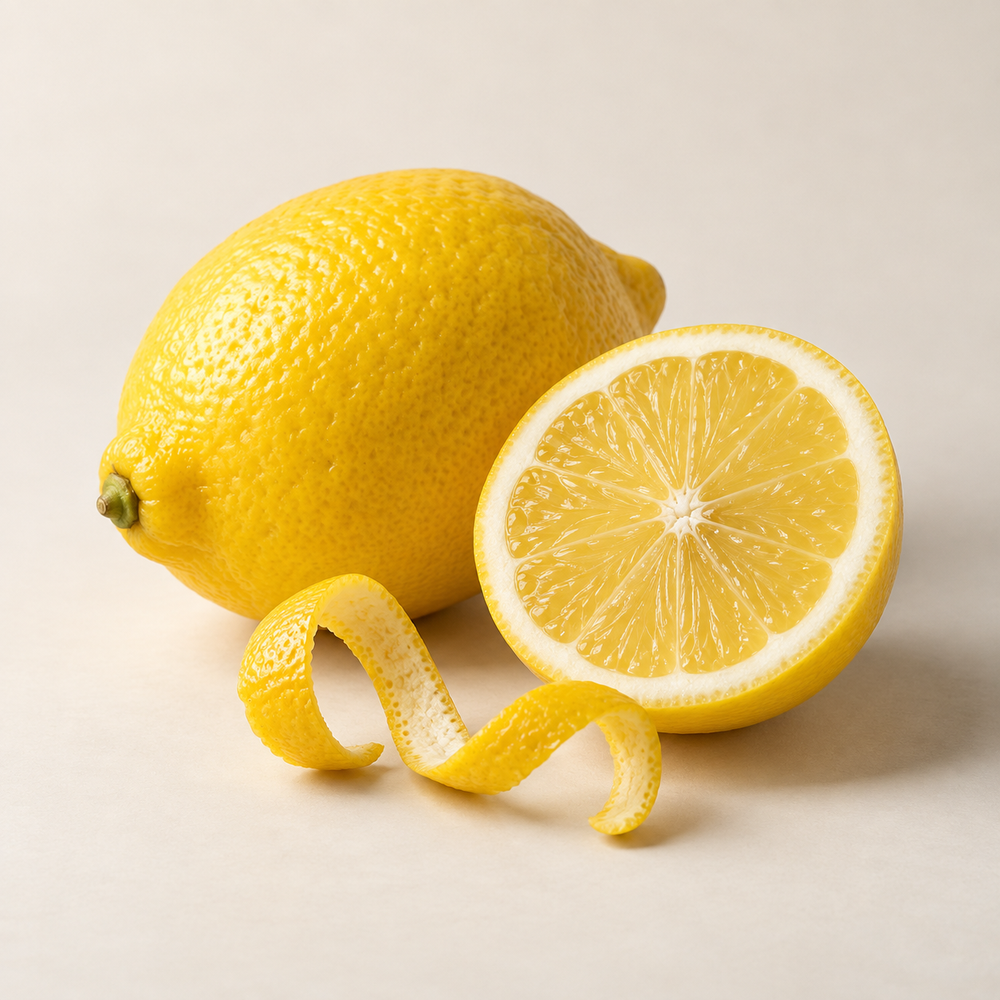
What does lemon smell like?
Lemon suggests the lively spray from freshly broken peel: zesty, bright and tangy. It often feels sharper than sweet orange and less rounded than mandarin. Sour is a useful association, but smell and taste are different senses; a lemon perfume is not necessarily acidic in the way lemon juice tastes.
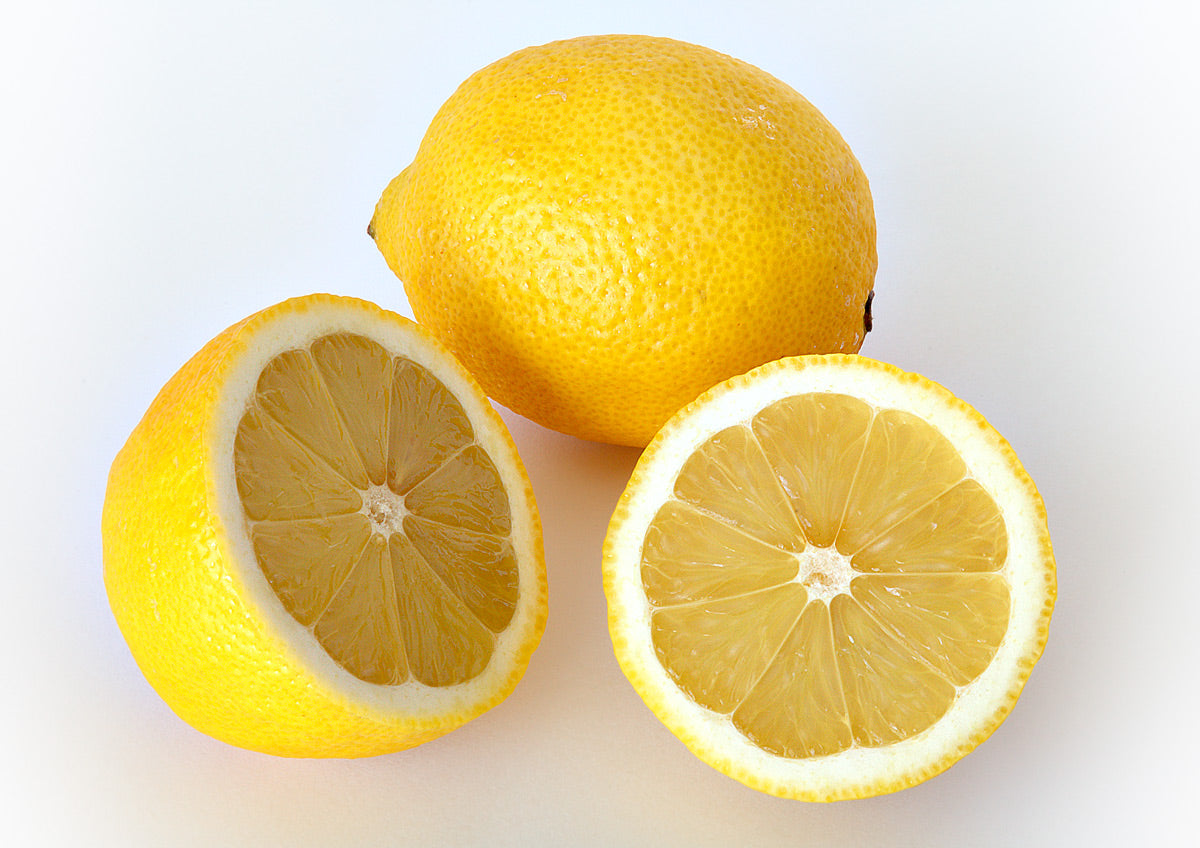
The aromatic peel of Citrus limon
Natural lemon perfumery oil comes from the peel of Citrus limon. The oil is distinct from the watery juice squeezed from the flesh. A lemon note can also be composed with other aroma materials, so the consumer-facing description need not identify one particular oil.
A documented Italian oil
Italy is the source of the reviewed cold-pressed material. Its record identifies species, peel and process together. That is specific provenance for the supplied oil, not a claim about every fragrance using the word lemon.
Expression captures the peel aroma
Cold expression mechanically releases aromatic oil from the peel. This differs from distilling a flower or extracting a resin. Keeping the plant part in mind explains why a perfume’s lemon effect may recall zest more closely than lemonade.
Peel
The outer peel is the aromatic starting material; the juice is a separate product.
Expression
Mechanical processing releases and collects the peel oil.
Composition
The perfumer balances the natural oil or a lemon reconstruction with the rest of the fragrance, adjusting the impression rather than simply bottling fruit.
A material distinction and a style distinction
An expressed oil and a reconstructed lemon effect are different routes. Separately, a perfume can present dry zest, juicy citrus or sweet lemon-candy associations. The latter are creative styles; they should not be presented as botanical varieties or extraction grades.
A clear point of brightness
The reviewed oil is used for introductory or top-note effects. Lemon can provide a bright reference against which softer flowers, herbs or woods become easier to notice. A later lemon-like impression does not prove that the original peel oil remains unchanged; it belongs to the whole composition.
Compare sharpness, bitterness and sweetness
Place lemon beside grapefruit and orange as a smelling exercise. Ask whether you notice pointed zest, bitter pith or rounded sweetness. Then follow the lemon fragrance into its heart: does it become herbal, floral or woody? This is more informative than grouping every citrus fragrance under one word, fresh.
Go deeper
Is lemon perfume made from juice?
Natural lemon oil is a peel material. A perfume can also reconstruct the effect; neither route requires lemon juice in the bottle.
Does a lemon smell prove natural lemon oil?
No. A recognisable citrus effect does not identify the ingredient source or formula.
Why might lemon feel like a familiar cleaning product?
Memory and the surrounding composition influence associations. Try describing the actual zest, sweetness and texture before deciding which familiar object it resembles.
Explore combinations
Ideas for exploring scent; related notes are not necessarily synonyms.
-

Ginger
Explore Ginger → -

Lavender
Explore Lavender → -

Incense
Explore Incense →


Related notes
Ideas for exploring scent; related notes are not necessarily synonyms.
-

Grapefruit
Explore Grapefruit → -

Mandarin
Explore Mandarin →


Perfumes containing this note
Selected from MOM's structured fragrance profiles for this exact note. A listed note describes the fragrance and does not disclose its formula.
-

Sapil Royale Charm EDP
From ₹410.00
Available View fragrance -

Ahmed Al Maghribi Ctrine 100ml Extrait De Parfum
₹2,900.00
Available View fragrance -

Ahmed Al Maghribi- Blue By Ahmed 100ml - Edp
₹2,499.00
Available View fragrance -

Ahmed Al Maghribi Kaffe Latte 100ml
₹2,600.00
Available View fragrance -

Ahmed Al Maghribi Kawkab 75ml
₹5,400.00
Available View fragrance -

Mykonos Inception Extrait de Parfum
From ₹700.00
Available Available in a 10 ml decant. View fragrance -

Albait Aldimashqi Bleu 75ml Eau De Parfum
₹2,250.00
Available View fragrance -

Albait Aldimashqi No. 5 75ml edp
₹2,250.00
Available View fragrance -

Albait Aldimashqi Outlands EDP 75ML
₹2,749.00
Available View fragrance -
Albait Aldimashqi Royal Oud EDP 75ML
₹2,749.00
Available View fragrance -

Tester Rasasi Hawas For Him EDP 100ml
₹2,679.00
Sold out View fragrance -

Rasasi Hawas For Him EDP
From ₹699.00
Available View fragrance -

Rasasi Shuhrah Pour Femme EDP
₹2,590.00
Available View fragrance -

Rasasi Shuhrah Elixir 100ML Edp
₹2,499.00
Sold out View fragrance -

Armaf Club De Nuit Iconic For Men EDP 105ml
₹5,999.00
Available View fragrance -

Khadlaj Island Sun Extrait de Parfum
From ₹530.00
Available Available in a 10 ml decant. View fragrance -

Khadlaj Bleu Glace Extrait de Parfum
From ₹490.00
Available Available in a 10 ml decant. View fragrance -

Khadlaj Sensuos Night EDP
From ₹410.00
Available Available in a 10 ml decant. View fragrance -

Armaf Club De Nuit Intense Man Pure Parfum
₹4,249.00
Available View fragrance -

Ahuja Mangue Mood Parfum
₹3,500.00
Available View fragrance -

Ahuja Amber Sage Parfum
₹3,500.00
Available View fragrance -

Ahuja Fresh Affairs Parfum
₹3,500.00
Sold out View fragrance


Research and transparency
Sources explain the materials and scent effects discussed above. Supplier descriptions refer to their own materials; pairing exercises are MOM editorial suggestions. Product discovery retains the existing verified note relationships.