
MOM PERFUMES / FRAGRANCE NOTE LIBRARY
Grapefruit
Citrus brightness with a distinctive bitter-peel edge.
Citrus
- Citrusy
- Pithy
- Fresh
- Bitter-sweet
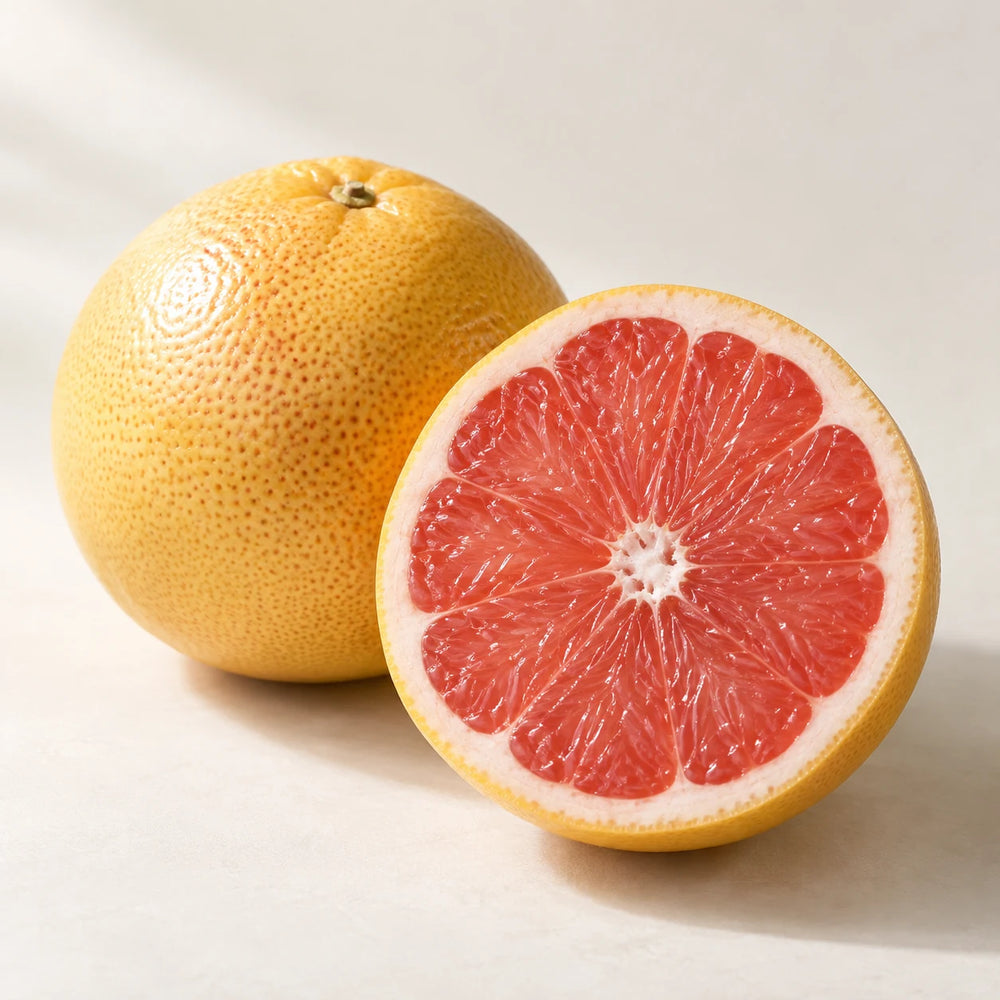
What does grapefruit smell like?
Think of a freshly broken grapefruit peel: bright citrus with sweetness, followed by a drier, bitter-pith suggestion. That pithy edge helps distinguish it from a purely sweet orange impression. In perfume, “juicy” is a smell association; there need not be any juice in the bottle.
Peel oil, not squeezed juice
Natural grapefruit oil comes from the fruit’s outer peel. Supplier records commonly use the botanical name Citrus paradisi. The natural oil and a composed grapefruit note are different levels of description: one identifies a raw material, while the other tells us the effect the fragrance evokes.
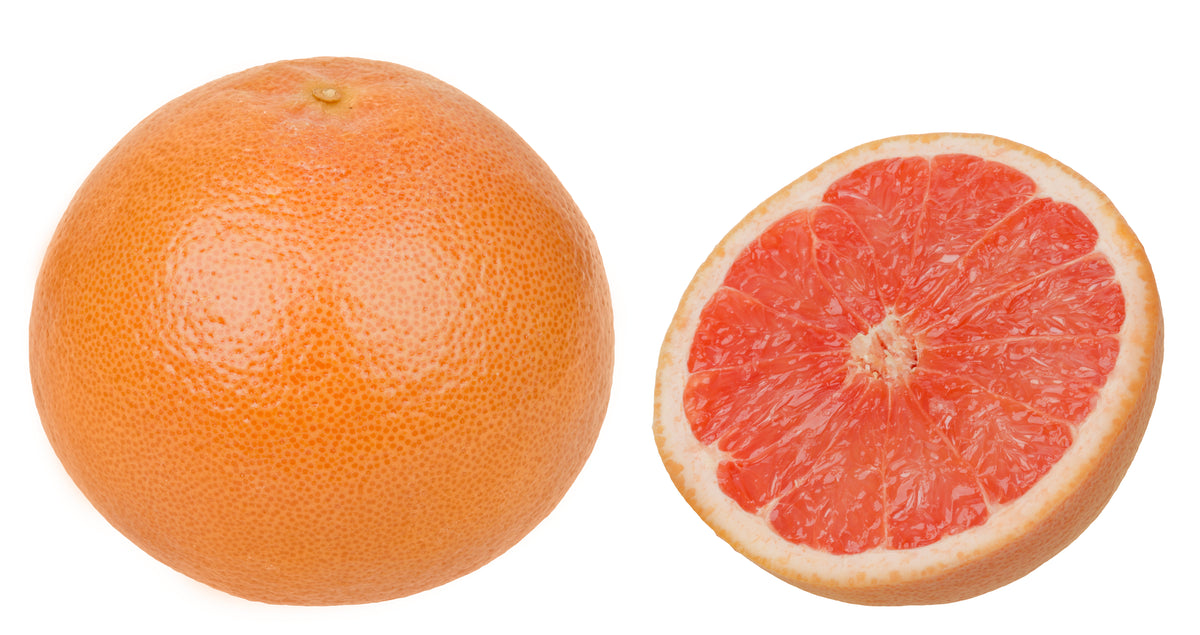
Pink and white: compare the balance
Both oils belong to the grapefruit family of smells. Their relative sweetness and bitterness offer a more useful comparison than expecting the scent to reproduce the colour of the flesh.
Pink grapefruit
The reviewed pink oil has a light, sweet citrus character with a pithy drydown. The supplier places it toward the sweeter end of its grapefruit range.
White grapefruit
The white oil offers a tangier, bitter-sweet citrus interpretation. Compare the sharp peel impression as well as the first burst of fruit.
A documented source, not a formula claim
The reviewed pink oil is sourced in the USA. Its documentation identifies the peel and cold-pressing process. Those details establish the supplier’s material; they do not establish the agricultural origin of every grapefruit perfume. Use provenance claims only when the fragrance brand provides them explicitly.
How peel becomes fragrant oil
Cold expression mechanically releases aromatic oil from the peel. The collected oil is a different product from the watery juice in the fruit. This distinction explains why the familiar taste of grapefruit is not an exact guide to the smell of its perfumery material.
A small part can shape the whole smell
Grapefruit oil contains a large amount of citrus-smelling limonene, but much smaller constituents contribute to its recognisable identity. The supplier highlights nootkatone and a sulfur-containing trace constituent. A grapefruit accord may reproduce selected facets using aroma materials; a note listing cannot identify the recipe.
A bright opening with a dry counterpoint
Grapefruit is useful in citrus and cologne-style openings. Its bitter-peel association gives a perfumer a different emphasis from straightforward sweet citrus. Think of brightness and sweetness as separate qualities: a grapefruit-led perfume can feel very luminous while remaining relatively dry.
Follow the peel as the fruit fades
When exploring the existing products, notice whether the grapefruit impression moves toward aromatic herbs, dry woods or softer fruit. Compare it with a mandarin-led fragrance and describe the pithy edge, rather than simply calling both fresh. This exercise is about perception, not identifying hidden formula ingredients.
Go deeper
Does pink grapefruit make a perfume pink?
No. Fruit colour and a perfume’s appearance are separate matters; the note describes a smell impression.
Why is it sometimes more bitter than juicy?
The aromatic material comes from peel, and the pithy association is part of its character. A composition may emphasise that dry facet instead of fruit sweetness.
Can I identify natural grapefruit oil by smelling a perfume?
The impression alone is not reliable proof. Natural oil, supporting aroma materials and the surrounding fragrance can overlap perceptually.
Explore combinations
Ideas for exploring scent; related notes are not necessarily synonyms.
-

Cardamom
Explore Cardamom → -

Cedarwood
Explore Cedarwood → -

Geranium
Explore Geranium →


Related notes
Ideas for exploring scent; related notes are not necessarily synonyms.
-

Orange
Explore Orange → -

Lemon
Explore Lemon → -

Mandarin
Explore Mandarin →


Perfumes containing this note
Selected from MOM's structured fragrance profiles for this exact note. A listed note describes the fragrance and does not disclose its formula.
-

Hermes - Terre D hermes pure parfum 12.5ML (MINIATURE)
₹1,799.00
Sold out View fragrance -

Hermes Terre D'Hermes Parfum for Men
From ₹8,550.00
Available View fragrance -

Terre D'hermes 200ML PURE Parfum
₹15,500.00
Available View fragrance -

Tester Hermes Terre D'hermes Pure parfum 75ml
₹7,350.00
Sold out View fragrance -

Nishane Hacivat Extrait de Parfum
From ₹1,250.00
Available Available in a 10 ml decant. View fragrance -

Afnan Historic Olmeda 100ml Eau De Parfum
From ₹560.00
Available Available in a 10 ml decant. View fragrance -

Paris Corner Khair EDP
From ₹427.50
Available Available in a 10 ml decant. View fragrance -

Ahmed Al Maghribi Ighraa 100ml Edp
₹2,300.00
Sold out View fragrance -

Ahmed Al Maghribi O'Clock 100ML EDP
₹2,400.00
Sold out View fragrance -

Ahmed Al Maghribi- Blue By Ahmed 100ml - Edp
₹2,499.00
Available View fragrance -

Ahmed Al Maghribi- Frost Ice 100ML EDP
₹1,900.00
Sold out View fragrance -

Ahmed Al Maghribi Kawkab 75ml
₹5,400.00
Available View fragrance -

Mykonos Glitch Extrait de Parfum
From ₹640.00
Available Available in a 10 ml decant. View fragrance -

Mykonos California Blue Extrait de Parfum
From ₹640.00
Available Available in a 10 ml decant. View fragrance -

Mykonos Reflection Extrait de Parfum
From ₹740.00
Available Available in a 10 ml decant. View fragrance -

Ahmed Al Maghribi White Tiger 100ml
₹3,300.00
Available View fragrance -

Ahmed Al Maghribi- Zeleny 100ML EDP
₹2,650.00
Available View fragrance -

Albait Aldimashqi Light Blue Intense 75ml edp
₹2,250.00
Available View fragrance -

Albait Aldimashqi 212 Men Nyc 75ml Eau De Parfum
₹2,250.00
Available View fragrance -

ALBAIT ALDIMASHQI HOMME SPORT 75ml edp
₹2,250.00
Available View fragrance -

Albait Aldimashqi Gris Montaigne EDP 75ML
₹2,749.00
Available View fragrance -
Albait Aldimashqi Wood Sage & Sea Salt EDP 75ML
₹2,749.00
Available View fragrance -

Rasasi Fattan Pour Homme EDP 50ml
₹1,549.00
Sold out View fragrance -

Rasasi Shaghaf Pour Homme EDP
₹2,300.00
Sold out View fragrance


Research and transparency
Sources explain the materials and scent effects discussed above. Supplier descriptions refer to their own materials; pairing exercises are MOM editorial suggestions. Product discovery retains the existing verified note relationships.