
MOM PERFUMES / THE FRAGRANCE NOTE LIBRARY
Oud
A fragrant transformation inside the wood.
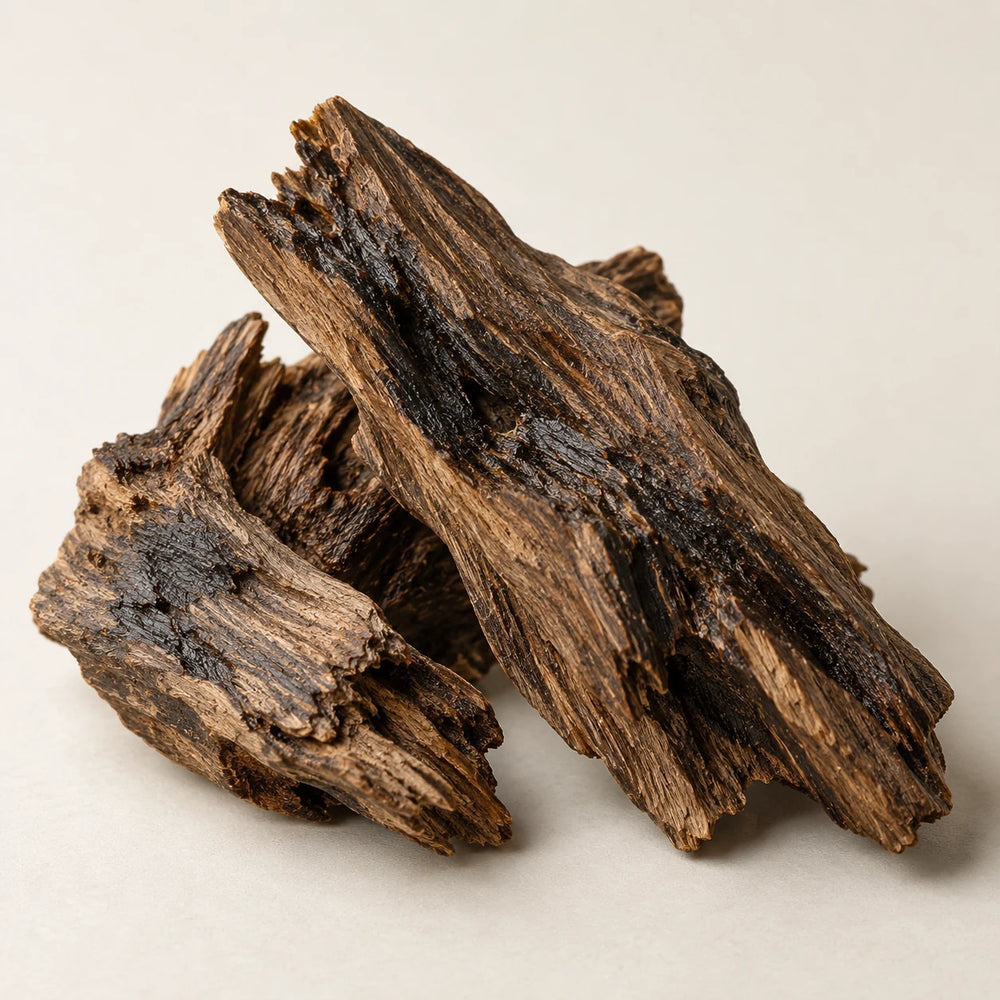
What does oud smell like?
Oud can suggest warm resinous wood, leather and balsamic depth, sometimes with smoky or animalic facets. These descriptors come from one documented agarwood oil; they are not a universal oud formula. Treat them as possibilities rather than expect every oud perfume to smell dark, forceful or identical.
Woody
A resin-rich wood impression.
Balsamic
Deep, rounded aromatic warmth.
Leathery
A possible facet—not proof of leather as an ingredient.
Smoky facets
A possible association, not evidence of smoke being added.
Agarwood is not simply “a dark wood.”
Agarwood refers to fragrant resinous wood. Botanical accounts distinguish it from the ordinary pale wood of an Aquilaria tree, and experimental research describes formation associated with injury or artificial induction. The important idea is a transformation within the wood—not that every tree, or every dark piece of timber, is automatically aromatic agarwood.

Species, place and process each matter.
Aquilaria is not one geographical label. NParks records Aquilaria malaccensis as native to Singapore; Givaudan documents an Aquilaria crassna oil from Thailand; the cited formation study concerns Aquilaria sinensis. These are examples, not an exhaustive source map or a quality ranking.
Species
A. malaccensis, A. crassna and A. sinensis are distinct names. Do not turn a regional label into a species claim.
Place
A supplier can document its own origin. A perfume named Oud does not establish a country of harvest.
Processing
Resinous wood and distilled oil are related materials—not identical sensory experiences.
From resinous wood to distilled oil.
Hydrodistillation is the route documented for the Thai oil used as our material example. The graphic explains a broad sequence, not a method for inducing resin in trees or a recipe for making oud.
01
Resin develops
Fragrant material develops within responding wood.
02
Wood is selected
Resinous wood is identified and prepared.
03
Hydrodistillation
Water-based distillation recovers aromatic material.
04
Oil is evaluated
The resulting oil is a perfumery material in its own right.
A material specification is not a note list.
The documented Thai material names a species, a plant part and a distillation route. An Oud entry in a perfume’s note pyramid usually gives far less information. It should not be treated as a certificate of natural oil content, purity, origin or the amount used. This is the distinction the MOM knowledge library preserves.
Documented natural oil
A supplier record can identify what its own material is and how it was produced.
Oud scent impression
The consumer-facing note describes a direction. An oud accord and a specifically sourced agarwood oil must not be silently treated as the same ingredient.
Learn the character—not a performance promise.
The oil example shows that woody, balsamic and leathery impressions can coexist. In this library, those words help a reader imagine a direction. They do not justify tagging a finished perfume with every possible facet or promising a number of hours of wear.
Does “animalic” mean it comes from an animal?
Not necessarily. The cited oil is a wood-derived material, yet its maker uses animalic among its scent descriptors. A word describing an odour should not be mistaken for a declaration of ingredient origin.
Is agarwood always caused by one fungus?
The sources here do not support such a simple universal rule. The research abstract discusses injury and artificial induction; botanical accounts describe resinous fragrant wood developing in affected trees. This page does not claim one organism or one induction technique explains every material.
What can a photograph tell us about sourcing?
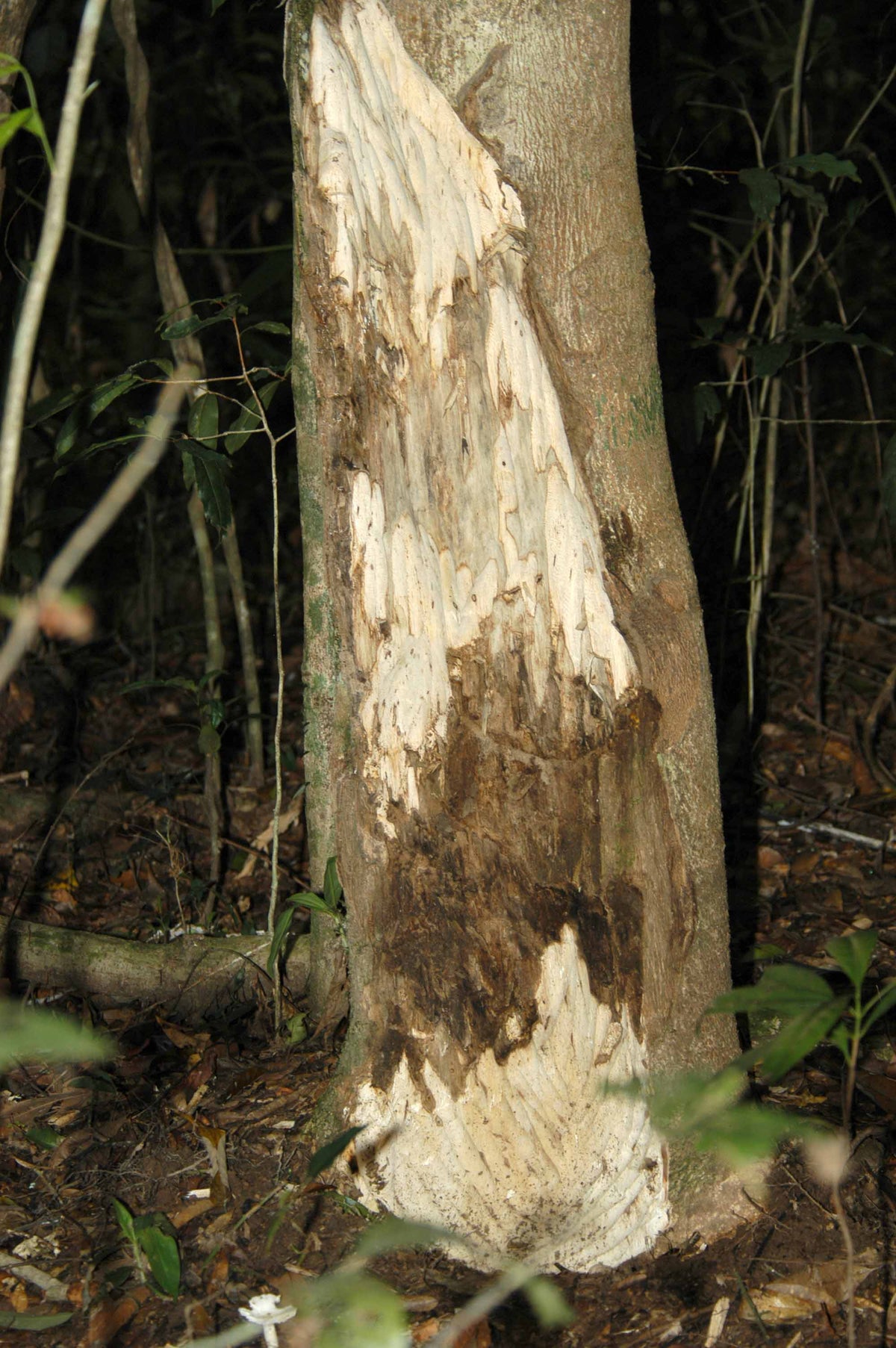
A photograph can explain what a plant or material looks like, but it cannot establish legal origin, sustainability, purity or quality. The tree photograph below has an important context: its author documents damage attributed to illegal harvesting. It should never be repurposed as a demonstration of recommended collection.
Are wood chips and oil the same smelling experience?
They are different forms of a related material. The source photographs show pieces of wood, while the manufacturer example is a distilled oil. Neither a picture nor a note label substitutes for comparing a specific material or perfume.
Explore combinations
Editorial scent-exploration ideas, not formula rules. Links appear only when an educational destination is ready.

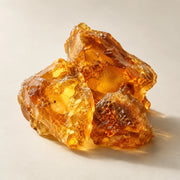
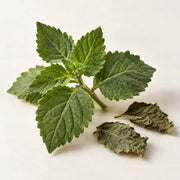
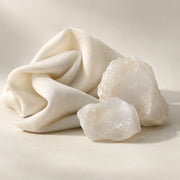
Related notes and materials
Related entries are not necessarily synonyms. Keep specific materials and the generic perfume note distinct.
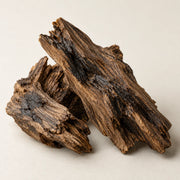
Oud accord
Fragrances with a verified Oud note
A deliberately small set of verified examples. This is not an exhaustive result or proof of natural ingredient content. Prices and availability come from the current product records.
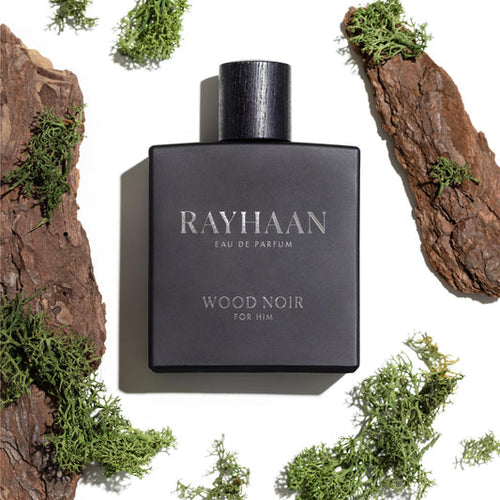


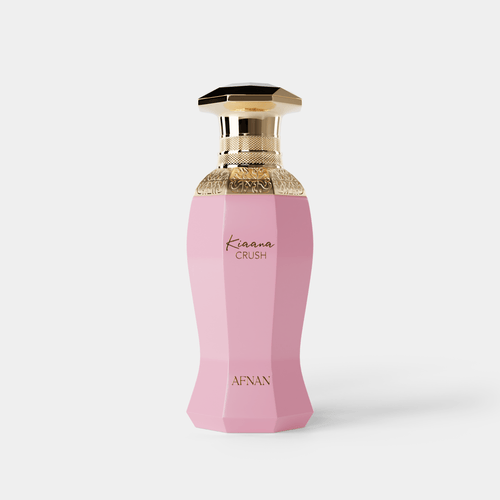
Afnan Kiaana Crush 100ml Eau De Parfum
From ₹570.00
10ml decant available — choose the format on the product page.
View fragrance →Research and transparency
Copy follows the owner-reviewed content package prepared on 23 September 2026. Botanical references explain materials; supplier descriptions describe their own products. Pairing suggestions are editorial. No perfume formula or personal smelling test is asserted.