
MOM PERFUMES / FRAGRANCE NOTE LIBRARY
Tonka bean
Almond softness, vanilla warmth and the dry scent of hay.
Gourmand
- Powdery
- Almond-like
- Warm
- Hay-like

What does tonka bean smell like?
Think of almond powder beside vanilla, with a drier suggestion of hay and tobacco underneath. Tonka can seem edible without smelling like a finished dessert. Its powdery texture is as useful a clue as its sweetness: imagine the soft smell around an almond biscuit rather than melted icing.
A seed, an extract and a scent description
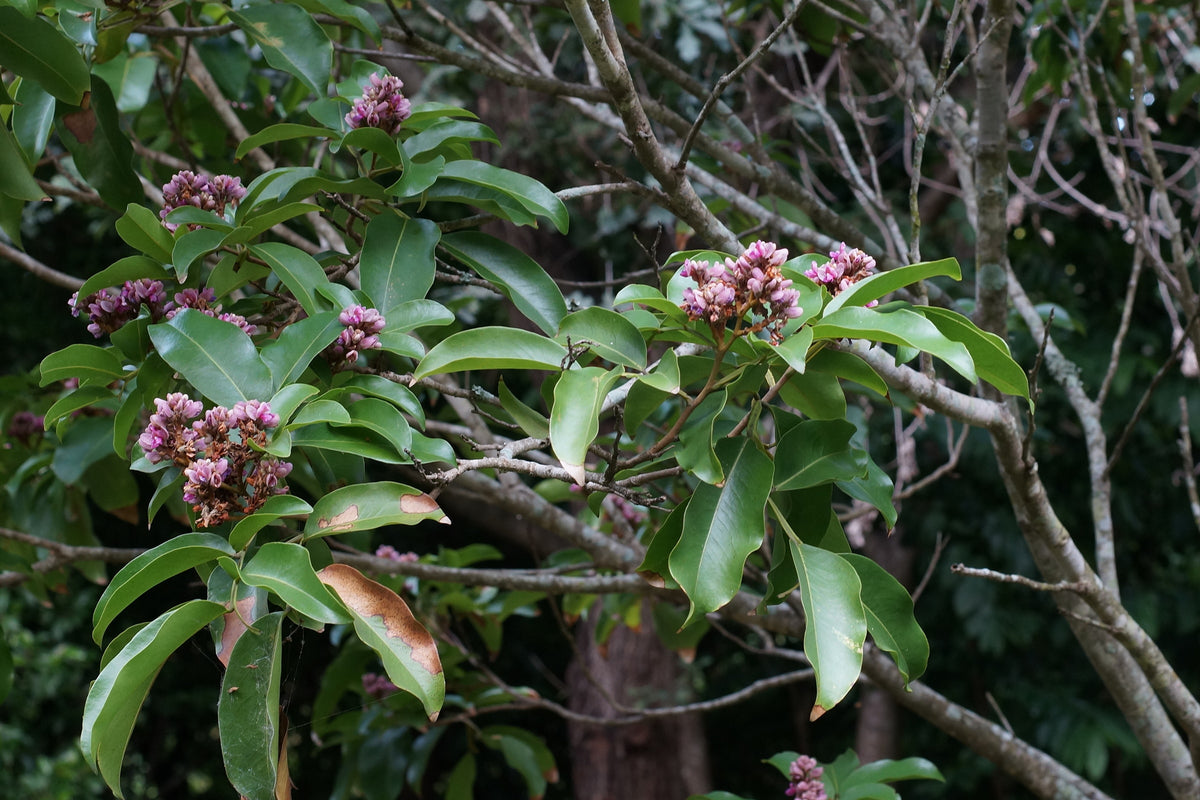
The aromatic seed of Dipteryx odorata is the source of natural tonka material. The tree is also known as cumaru in Brazil. Tonka absolute is an extract of prepared beans; a tonka note describes an impression in a perfume. That impression can be shaped with natural extract, manufactured materials or both.
From Amazonian fruit to perfumery material
Brazil is a documented source of tonka absolute. In the producer’s account, fallen fruits are gathered, opened to recover the seeds and then dried. The named origin concerns this particular supply chain. It cannot establish where the tonka impression in an unnamed fragrance came from.
Why preparation matters
The seed is not simply squeezed to release a fragrant oil. Preparing and extracting it concentrates a complex aromatic material. The resulting absolute retains more than the familiar sweet facet associated with coumarin.
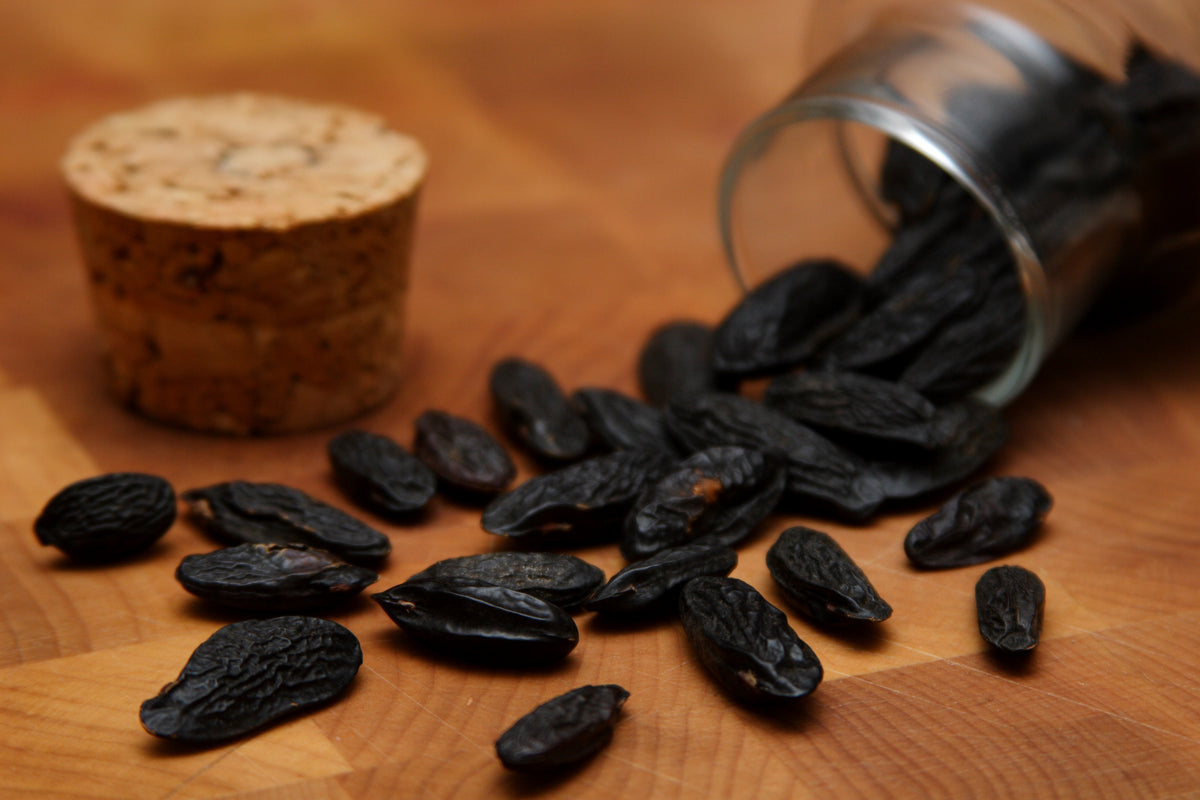
Prepared beans
Drying and curing prepare the seed for extraction; the wrinkled bean is the raw botanical material.
Absolute
Solvent extraction separates aromatic constituents from the seed. Further processing produces the perfumery extract.
In a composition
The perfumer balances the extract or a reconstruction against the other materials; a listed note does not reveal the recipe.
Tonka absolute is not the same as coumarin
Coumarin is closely associated with tonka’s sweet hay-like character. An isolated material supplies a particular effect; the natural absolute contains a wider mixture. Treat these as different tools, rather than assuming that one is merely a stronger version of the other.
Warmth that can join aromatic and sweet notes
Tonka works in amber, tobacco and fougère compositions. Fougère is a perfume family built around an aromatic, often lavender-led impression, rather than a literal extract of fern. Tonka’s dry sweetness helps explain why it fits both an aromatic fragrance and a gourmand one.
A smelling exercise: follow the dry side
When comparing fragrances below, ask whether tonka feels more almond-like, powdery or tobacco-like. With vanilla, notice whether the sweetness becomes rounder. With lavender, listen for the contrast between cool herbal freshness and warm hay. With woods, ask whether the result feels drier. These are comparison prompts, not claims about any perfume’s formula.
Go deeper
Is tonka another name for vanilla?
No. They are different plant materials. Their sweet facets overlap, but the almond, hay and tobacco associations make tonka a useful separate reference.
Does a tonka note prove natural beans were used?
No. A scent description does not identify the extract or aroma materials behind it. The article explains possible materials, while the product links preserve the existing note-based discovery.
Why can a tonka perfume feel less sweet than expected?
Attend to the surroundings: a dry wood or aromatic emphasis may make the powdery, hay-like aspect easier to notice than the dessert association. Compare the whole development, rather than judging by the opening alone.
Explore combinations
Ideas for exploring scent; related notes are not necessarily synonyms.
-

Lavender
Explore Lavender → -

Benzoin
Explore Benzoin → -

Cardamom
Explore Cardamom →


Related notes
Ideas for exploring scent; related notes are not necessarily synonyms.
-

Caramel
Explore Caramel → -

Praline
Explore Praline →


Perfumes containing this note
Selected from MOM's structured fragrance profiles for this exact note. A listed note describes the fragrance and does not disclose its formula.
-

Ahmed Al Maghribi Mosaic 100ml
₹2,400.00
Available View fragrance -

Ahmed Al Maghribi Niswah 75ml
₹4,450.00
Available View fragrance -

Ahmed Al Maghribi Peachy Peach 100ml
₹2,800.00
Available View fragrance -

Ahmed Al Maghribi Ruyaak 100ml
₹3,100.00
Available View fragrance -

Albait Aldimashqi ANGELS SHARE EDP 75ML
₹2,750.00
Available View fragrance -

Albait Aldimashqi Good Girl Women 75ml Eau De Parfum
₹2,249.00
Available View fragrance -

Rasasi Hawas Elixir 100ML EDP
₹2,699.00
Available View fragrance -
Tester Rasasi Hawas Elixir 100ML EDP
₹2,499.00
Sold out View fragrance -

Rasasi Daarej Pour Homme EDP 100ml
₹1,999.00
Available View fragrance -

Rassasi Hawas Sapphire Edp 100ml
₹3,799.00
Available View fragrance -

Rasasi Shaghaf Pour Homme EDP
₹2,300.00
Sold out View fragrance -

Rasasi Nafaeis Al Shaghaf Pour Homme EDP 100ml
₹2,450.00
Sold out View fragrance -

Rasasi Hawas Tropical For Men & Women 100ML EDP
₹2,899.00
Available View fragrance -

Rasasi Hawas Malibu 100ML EDP
₹2,950.00
Available View fragrance -

Khadlaj Zayaan Silver EDP
From ₹500.00
Available Available in a 10 ml decant. View fragrance -

Khadlaj Island Sun Extrait de Parfum
From ₹530.00
Available Available in a 10 ml decant. View fragrance -

Khadlaj Bleu Glace Extrait de Parfum
From ₹490.00
Available Available in a 10 ml decant. View fragrance -

Khadlaj Cream Velvet Extrait de Parfum
From ₹490.00
Available Available in a 10 ml decant. View fragrance -

Khadlaj Island Extrait de Parfum
From ₹500.00
Available Available in a 10 ml decant. View fragrance -

Khadlaj Karus Secret Musk EDP
From ₹510.00
Available Available in a 10 ml decant. View fragrance -

Khadlaj Mansion EDP
From ₹500.00
Available Available in a 10 ml decant. View fragrance -

Khadlaj Maison Epoque Artistique EDP
From ₹500.00
Available Available in a 10 ml decant. View fragrance -

Khadlaj Mocha Latte Extrait de Parfum
From ₹470.00
Available Available in a 10 ml decant. View fragrance -

Khadlaj Onyx Gold EDP
From ₹490.00
Available Available in a 10 ml decant. View fragrance


Research and transparency
Sources explain the materials and scent effects discussed above. Supplier descriptions refer to their own materials; pairing exercises are MOM editorial suggestions. Product discovery retains the existing verified note relationships.