
MOM PERFUMES / FRAGRANCE NOTE LIBRARY
Apple
From crisp green skin to ripe fruit and cider-like warmth.
Fruity
- Crisp
- Juicy
- Green
- Sweet
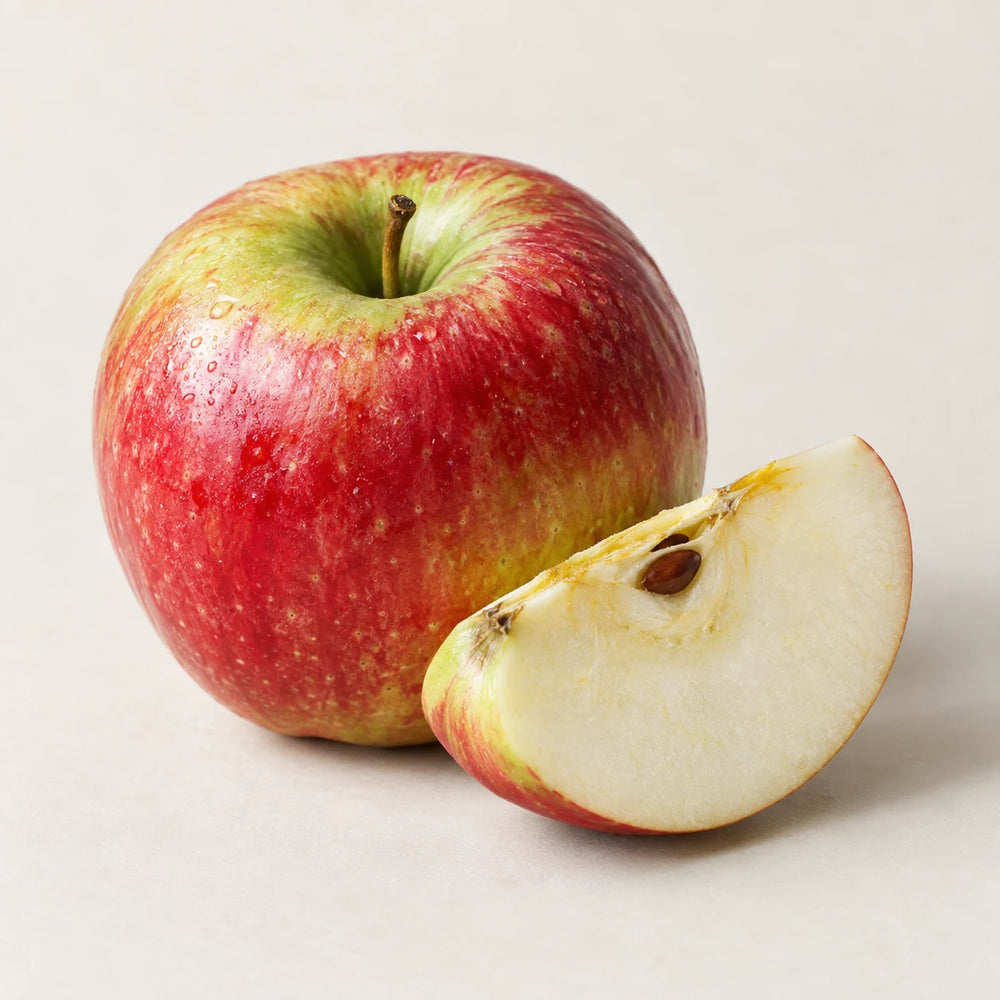
What does apple smell like in perfume?
Apple may evoke the snap of green skin, juicy ripe flesh or a sweeter cider-like fruitiness. Imagine those as different pictures of an apple rather than different strengths of one smell. A crisp apple fragrance and a warm, sweet one can legitimately share the same note name.
A constructed fruit impression
An apple note generally describes an accord assembled from aroma materials. It is not evidence of apple juice in the bottle or a standard distilled apple essential oil. The perfumer selects recognisable facets of fruit and balances them into the larger composition.

A molecule can suggest several fruits
Givaudan’s Manzanate is a documented material with ripe-apple, cider and sweet-pineapple facets. It illustrates how one ingredient can support a fruit impression without reproducing every part of that fruit. A finished apple accord may need fresh, green or sweet partners; the supplier example is not a disclosed recipe for any fragrance here.
Choose the image that matches your perception
These are creative directions, not botanical cultivar claims. They help you describe what you smell without assuming the perfume was made from a particular apple harvest.
Crisp green apple
Focus on sharp freshness and the suggestion of skin. Ask whether the fruit feels brisk rather than sugary.
Ripe apple
Focus on rounded fruitiness and softer sweetness. It may feel fuller without becoming a dessert.
Cider-like apple
Focus on a deeper, more developed fruit association. Cider-like is an odour description, not proof of fermented liquid in the formula.
No orchard belongs to the accord itself
A composed apple effect has no single growing region or extraction yield. Individual ingredients have their own supply chains. An apple illustration identifies the inspiration, while the article’s supplier reference identifies an example aroma material; those serve different educational purposes.
Fruit realism does not disclose sourcing
A manufactured material can create a recognisable fruit association. Conversely, the word natural would require an ingredient-specific statement, not just a realistic smell. Manzanate demonstrates a perfumer’s tool; its presence cannot be inferred from an apple listing.
Look for what changes the apple’s character
When comparing products, ask whether aromatic notes make the apple feel crisp, flowers make it softer, or sweetness makes it seem cooked or candied. Then describe whether the fruit remains distinct later in the fragrance. This separates the apple impression from the overall style instead of treating all apple perfumes as alike.
Go deeper
Is green apple a different extraction from red apple?
Not necessarily. In a note list these can describe creative effects. Only a specific material disclosure would establish an extract, cultivar or production route.
Does Manzanate prove there is pineapple in an apple perfume?
No. One material can have several odour associations. Its supplier description is not an ingredient list for a finished fragrance.
Why might apple feel more like shampoo than fresh fruit?
The surrounding composition and familiar product associations influence recognition. Try naming the qualities you perceive—crisp, floral, watery or sweet—rather than assuming a literal fruit source.
Explore combinations
Ideas for exploring scent; related notes are not necessarily synonyms.
-

Cinnamon
Explore Cinnamon → -

White musk
Explore White musk → -

Cedarwood
Explore Cedarwood →


Related notes
Ideas for exploring scent; related notes are not necessarily synonyms.
-

Pear
Explore Pear → -

Pineapple
Explore Pineapple →


Perfumes containing this note
Selected from MOM's structured fragrance profiles for this exact note. A listed note describes the fragrance and does not disclose its formula.
-

Ahuja Kiwi Tart Parfum
₹3,500.00
Available View fragrance -

Ahuja Mangue Mood Parfum
₹3,500.00
Available View fragrance


Research and transparency
Sources explain the materials and scent effects discussed above. Supplier descriptions refer to their own materials; pairing exercises are MOM editorial suggestions. Product discovery retains the existing verified note relationships.